Auckland’s unpredictable maritime climate is notorious for delivering four seasons in a single day. From torrential spring downpours that turn low-lying sections into swamps to baking February heat that cracks the heavy clay soils out West, local lawns endure extreme environmental stress year-round. Without a structured approach to property maintenance, homeowners and property managers often find themselves trapped in a frustrating, expensive cycle of overgrown jungles followed by scalped, burnt patches.
Transitioning from reactive, sporadic mowing to proactive, scheduled maintenance is the absolute secret to cultivating a resilient, vibrant yard. Implementing structured Seasonal Lawn Care Plans ensures that turf receives precisely what it needs, exactly when it needs it. This methodical approach eliminates the guesswork, saves property owners money on costly restorative work, and guarantees a pristine, welcoming appearance regardless of the weather.
Furthermore, understanding the specific micro-climates across the Greater Auckland area is essential. The sandy loam of the North Shore requires different moisture management than the dense, nutrient-rich volcanic soils found in parts of South Auckland. By adapting your maintenance schedule to these local nuances, you protect the long-term health of your soil and the aesthetic value of your real estate.
Key Takeaways
An effective seasonal lawn care plan adapts to Auckland’s climate by shifting from aggressive mowing and hydration in summer to weed suppression and aeration in winter. Consistent, scheduled maintenance prevents costly restorative work, ensures optimal soil health, and keeps both residential and commercial sections looking pristine year-round.
Quick Answer: What is an Effective Seasonal Lawn Care Plan?
Grass is a highly dynamic, living organism that reacts intensely to subtle shifts in soil temperature, daylight hours, and precipitation levels. An effective seasonal strategy goes far beyond simply pulling the pull-cord on the mower when the grass starts looking a bit untidy. It involves a calculated, year-round schedule of height adjustments, targeted weed control, and proactive health monitoring.
In the Greater Auckland area, the dominant grass species physically dictate the rhythm of this maintenance. Warm-season varieties like Kikuyu thrive in the intense summer heat, utilizing deep root systems to survive dry spells, but they slow down drastically and can even go dormant in winter. Conversely, cool-season grasses like Ryegrass hit their peak vegetative growth during the milder, wetter months of spring and autumn.
By implementing structured Seasonal Lawn Care Plans, property owners align their maintenance efforts seamlessly with these natural biological cycles. This prevents the turf from ever becoming highly stressed, drastically reduces the encroachment of invasive broadleaf weeds, and maintains a consistently neat appearance without requiring expensive interventions.
A true seasonal plan also factors in the disposal of green waste. During peak growth periods, the sheer volume of clippings can overwhelm standard residential compost bins. Professional scheduled plans handle this removal seamlessly, ensuring your property remains immaculate and free of rotting grass piles.
Before committing to a strict schedule, confirm whether your section is dominated by Kikuyu runners or a finer Ryegrass blend. This simple identification dictates whether your heaviest mowing and trimming frequency will fall in January or October.
The Auckland Seasonal Lawn Care Matrix: Month-by-Month Maintenance Tasks
Executing a flawless maintenance routine requires adapting to Auckland’s specific micro-climates. From the humid, salty coastal air of the Eastern Bays to the heavier, moisture-retaining clay soils out West, seasonal transitions dictate the exact physical tasks required on the ground. Breaking the calendar year into actionable protocols ensures your turf remains thick, resilient, and visually striking.
Comprehensive Seasonal Lawn Care Plans divide the calendar into four distinct phases: growth, survival, recovery, and dormancy. Understanding the biological imperatives of these phases allows for precise interventions that maximize your property’s curb appeal while minimizing unnecessary labor and expense.
Spring and Summer Protocols: Managing Rapid Growth and Clay Soil Hydration
Spring (September to November) triggers an explosive growth phase across almost all Auckland sections. As soil temperatures steadily rise and rainfall remains highly consistent, grass rapidly wakes from its winter sluggishness. This is the critical window for establishing turf density, requiring frequent, scheduled mowing to keep the fast-growing blades in check without cutting too deeply into the crown.
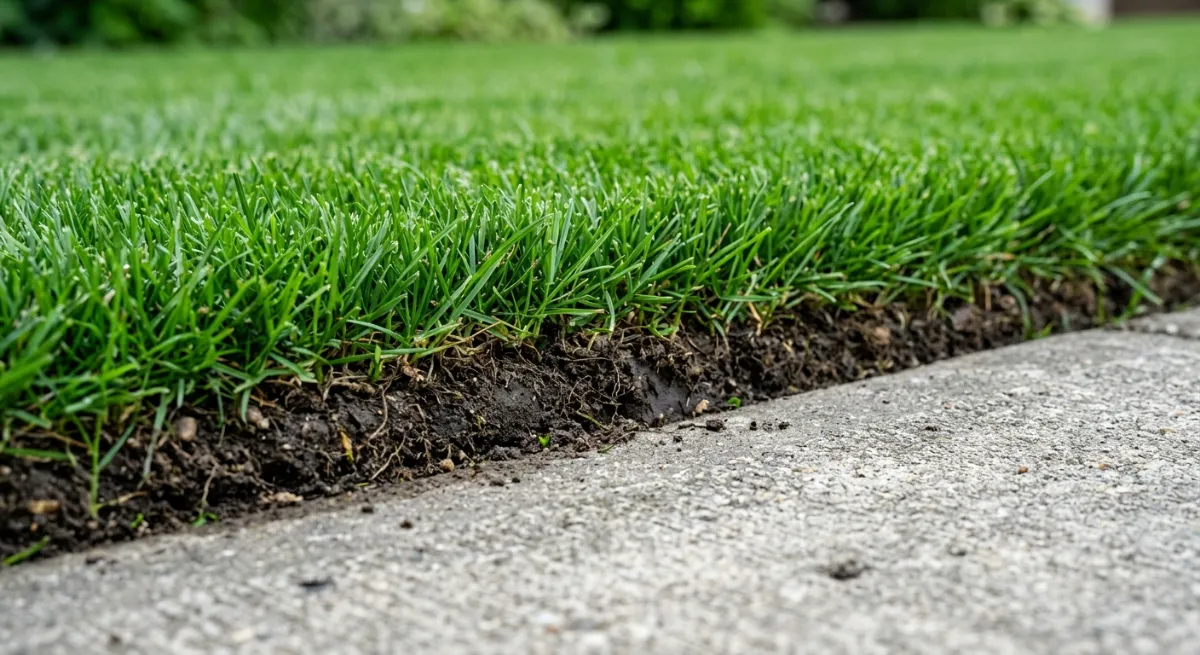
During this spring flush, edging becomes incredibly important. Grass will aggressively attempt to reclaim concrete pathways, garden beds, and driveway borders. Meticulous weed-eating and Decorative Shrub Shaping during these months establishes sharp, clean lines that define the entire landscape and elevate the property’s street appeal.
As the season shifts into Summer (December to February), the core strategy must pivot away from managing rapid growth to ensuring baseline survival. Auckland’s notorious clay soils can bake into an impenetrable, cracked crust during extended dry spells. Mowing heights must be deliberately raised to shade the fragile root systems, helping the soil retain precious moisture.

Never cut more than one-third of the grass blade length in a single mow. Scalping the lawn in summer exposes the delicate crowns to harsh UV rays, leading to rapid dehydration, root death, and inviting aggressive weed infestations.
Autumn and Winter Protocols: Aeration, Weed Suppression, and Wet Weather Prep
Autumn (March to May) is widely considered by professionals to be the most important recovery season in the landscaping calendar. The intense, burning summer heat subsides, but the underlying soil remains warm enough to support vigorous root development. This is the ideal time to rebuild turf density and address any compacted areas caused by heavy summer foot traffic or backyard cricket matches.
Autumn is also the season for managing organic debris. Falling leaves from deciduous trees can quickly smother a lawn, blocking sunlight and creating a damp environment that encourages fungal diseases. Regular clearance of this debris is a non-negotiable aspect of any robust maintenance plan.
Winter (June to August) brings an entirely different set of logistical challenges, primarily driven by saturated soils and significantly reduced daylight. Grass growth slows to a mere crawl, meaning the frequency of mowing visits can be significantly reduced. However, this dormant period is exactly when opportunistic broadleaf weeds and moss aggressively attempt to take over weak patches.
Avoid running heavy mowers over waterlogged lawns during peak winter downpours. This rapidly compacts the soil, destroys the delicate soil structure, and creates deep, muddy ruts that will require extensive, costly repair in the spring.
To clearly visualize how these critical tasks shift throughout the year, refer to the seasonal matrix below. It outlines the core focus areas that dictate a highly reliable maintenance schedule.
| Season | Primary Focus | Mowing Frequency | Key Maintenance Action |
|---|---|---|---|
| Spring (Sep – Nov) | Managing rapid growth flushes | Weekly to Fortnightly | Lowering blade height slightly, edging overgrowth |
| Summer (Dec – Feb) | Hydration and stress survival | Fortnightly | Raising blade height, managing dry patches |
| Autumn (Mar – May) | Recovery and density building | Fortnightly | Clearing fallen leaves, addressing compaction |
| Winter (Jun – Aug) | Weed suppression and drainage | Every 3 to 4 Weeks | High cuts, avoiding saturated soil damage |
Commercial vs. Residential Plans: Selecting the Right Frequency for Your Section
While the biological needs of grass remain fundamentally the same regardless of location, the logistical requirements of maintaining commercial spaces differ vastly from private residential homes. Tailoring Seasonal Lawn Care Plans to the specific use-case of the property is absolutely essential for maximizing value and minimizing operational disruption.
For residential homeowners, the primary goal is often weekend appeal and creating a safe, usable outdoor space for families and pets. These clients benefit heavily from reliable, set-and-forget fortnightly schedules. This frequency prevents the yard from ever looking untidy, completely eliminating the exhausting weekend chore of pushing a heavy mower around.
Commercial properties, such as retail strips, office parks, and body corporate complexes, face much stricter aesthetic and operational demands. A neglected perimeter or overgrown storefront can immediately signal unprofessionalism to visiting clients or prospective tenants. Furthermore, commercial plans must strictly account for quiet hours, ensuring heavy machinery doesn’t disrupt important meetings or degrade customer experiences.
- Residential Focus: Consistent curb appeal, meticulous weed-eating around delicate garden beds (such as our premier Mt Eden Garden Maintenance), and complete removal of green waste to keep driveways and patios exceptionally clean.
- Commercial Focus: Strict adherence to health and safety standards, maintaining clear sightlines for business signage, and scheduling noisy work entirely outside of peak business hours.
- Landlord & Property Manager Focus: Routine, documented upkeep that prevents tenants from letting the section overgrow, protecting the property’s long-term equity and avoiding costly council clean-up notices.
Professional maintenance is not a luxury reserved for the wealthy. By adhering to a consistent, value-priced schedule, property owners actually save significant money by avoiding the exorbitant fees associated with massive, one-off jungle clearing operations.
Proactive Quality Benchmarks: How Garry’s Auckland Lawns Validates Lawn Health Year-Round
The local landscaping industry is unfortunately plagued by unreliable operators and faceless, oversized franchises that prioritize speed over quality. A true seasonal strategy requires a keen eye, deep local knowledge, and a commitment to on-the-ground validation. This is exactly where active owner involvement completely changes the service dynamic.
At Auckland Lawns, Garry remains actively involved in the field, personally overseeing the quality of the work and training the crew. If you want to know more About Auckland Lawns, you’ll find that our team is committed to the highest standards. This hands-on, owner-operator approach ensures that every scheduled visit meets strict aesthetic benchmarks. It’s not just about running a mower over the grass; it’s about continuously checking the health of the turf, identifying early signs of pests, and ensuring the edges are immaculately sharp.
When extreme weather events force a delay—a common reality in Auckland—proactive communication becomes the ultimate benchmark of reliability. Instead of leaving clients guessing if the crew will show up, a professional service updates them before they even have to ask. This high level of transparency, combined with rigorous quality control, forms the unshakeable backbone of highly effective Seasonal Lawn Care Plans.
Ultimately, maintaining a beautiful, healthy property shouldn’t be a source of constant stress or weekend anxiety. By trusting a dedicated, value-focused local team that truly understands the nuances of Auckland’s shifting seasons, property owners can reclaim their weekends and enjoy pristine outdoor spaces year-round.