Maintaining a beautiful property in Auckland requires more than just an occasional weekend mow. The North Shore presents a highly unique microclimate that constantly challenges homeowners and property managers alike. From the relentless coastal salt spray to the heavy, waterlogged clay soils of the northern suburbs, keeping a section pristine is an ongoing battle.
Many residents find themselves spending their precious Saturday mornings wrestling with overgrown Kikuyu grass or trying to revive drowned winter lawns. Understanding the distinct seasonal rhythms of the region is the first step toward reclaiming your weekends. By aligning your maintenance schedule with local weather patterns, you can cultivate a lush, resilient outdoor space.
Whether you manage a sprawling family section in Albany or a compact, house-proud garden in Devonport, the principles of effective turf and garden care remain the same. This comprehensive guide will explore the exact strategies, soil science, and scheduling secrets needed to master garden maintenance on the North Shore.
Key Takeaways
The best lawn care routine for the North Shore involves mowing every 1-2 weeks during the rapid spring growth phase and extending to 3-4 weeks in winter. Success requires managing the heavy clay soils of the East Coast Bays and adapting to Auckland’s high-humidity, subtropical-leaning climate.
What is the Best Lawn and Garden Maintenance Schedule for Auckland’s North Shore?
Creating a sustainable maintenance schedule requires a deep understanding of Auckland’s unpredictable weather. The North Shore experiences a temperate, subtropical-leaning climate with high humidity and significant year-round rainfall [1]. This environment causes grass to grow at vastly different rates depending on the month.
During the peak spring months of September through November, a fortnightly mow is rarely enough. The combination of warming soils and heavy spring showers triggers an explosive growth phase for common turf varieties like Kikuyu and Perennial Ryegrass. To maintain a crisp, neat appearance, weekly mowing becomes an absolute necessity.
Conversely, the cooler, wetter winter months demand a much lighter touch. Growth slows to a crawl, and heavy mowing equipment can easily damage waterlogged turf. Adjusting your frequency based on real-time weather data rather than a rigid calendar is the secret to long-term turf health.
Key Regional Factors Influencing North Shore Property Maintenance
Auckland’s geography creates distinct microclimates that dictate how plants and lawns behave. While our team covers diverse regions including West Auckland and Central Auckland, properties situated on the coastal fringes of Milford, Takapuna, and Browns Bay are constantly battered by salt-laden sea breezes. This coastal exposure can easily burn delicate plant foliage and dry out topsoil during the summer months.
Further inland, suburbs like Glenfield and Albany often experience slightly higher summer temperatures and lower wind speeds. This stagnant, humid air creates the perfect breeding ground for fungal lawn diseases. Brown patch and dollar spot can decimate a healthy lawn in a matter of weeks if left unchecked.
Property contour also plays a massive role in maintenance difficulty. Many sections in Birkenhead and Northcote feature steep, sloping banks that make traditional mowing dangerous. These challenging topographies often require specialized weed-eating techniques to keep the berms and boundaries looking sharp.
If your property faces the Hauraki Gulf, prioritize salt-tolerant boundary hedges like Griselinia or Pohutukawa. They naturally resist wind burn and require far less restorative pruning than delicate ornamental species.
North Shore Soil and Climate Comparison: East Coast Bays vs. Inner Harbour Suburbs
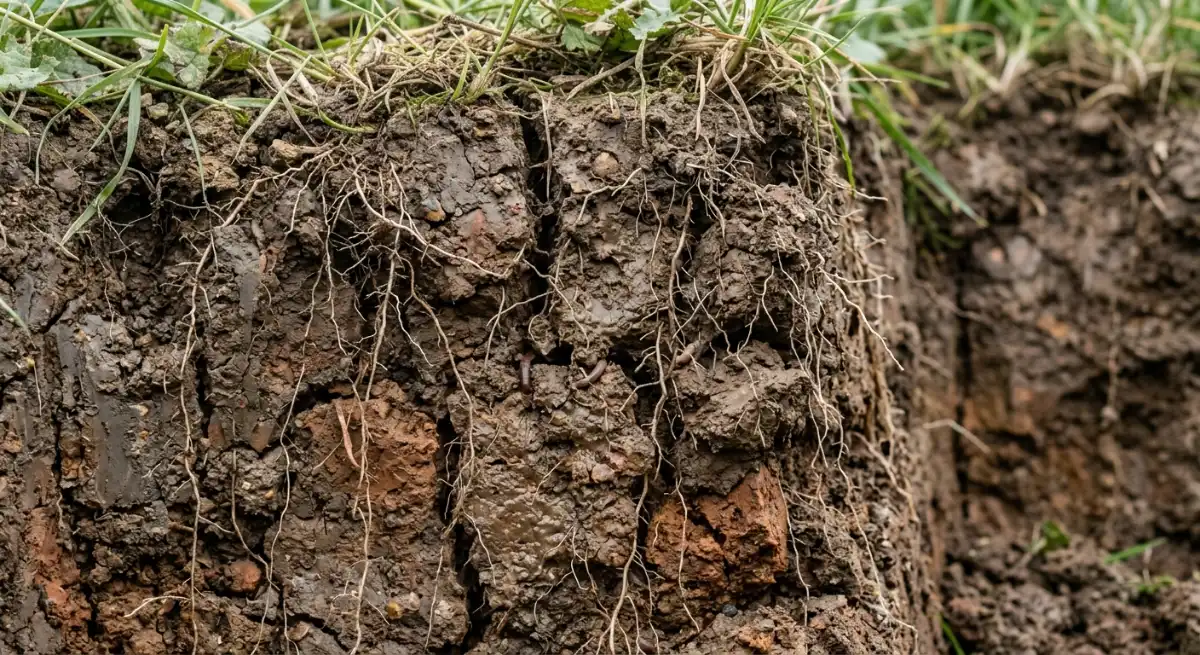
Not all dirt is created equal, and the North Shore is a perfect example of extreme geological diversity. The underlying soil structure dictates everything from drainage capacity to fertilizer absorption [2]. Understanding what lies beneath your grass is critical for tailoring your care approach.
The East Coast Bays area is notorious among landscapers for its heavy, reactive clay soils. This dense Whangaripo clay shrinks and cracks during dry summer spells, tearing delicate grass roots apart. During winter, it turns into an impermeable barrier, leaving lawns completely waterlogged and prone to moss invasions.
In stark contrast, suburbs closer to the inner harbour, such as Devonport, benefit from historical volcanic activity. The soil here features pockets of rich volcanic loam and basalt break-down. This provides vastly superior drainage and nutrient retention, making it much easier to cultivate a premium, golf-course-style turf.
| Region | Dominant Soil Type | Winter Drainage | Recommended Care Strategy |
|---|---|---|---|
| East Coast Bays (Browns Bay, Torbay) | Heavy Whangaripo Clay | Very Poor (Prone to pooling) | Annual core aeration, liquid gypsum application, raise mowing height in winter. |
| Upper Harbour (Albany, Greenhithe) | Mixed Clay and Alluvial Silt | Moderate | Regular dethatching, strict weed control, balanced seasonal fertilizing. |
| Inner Harbour (Devonport, Northcote) | Volcanic Loam & Basalt Mix | Excellent | Frequent summer watering, lower mowing heights, premium overseeding. |
Essential Seasonal Care Milestones for North Shore Lawns
A reactive approach to yard work usually results in overwhelming weekend catch-up sessions. Proactive, scheduled maintenance is the only way to keep a section looking professionally managed year-round [3]. By breaking your tasks down into seasonal milestones, the workload becomes highly predictable.
The transition periods of Spring and Autumn are the most critical windows for lawn health. This is when the soil temperatures are ideal for seed germination and root recovery. Missing these crucial action windows can leave your grass thin and vulnerable to weed invasions.
- Spring (Sept-Nov): Increase mowing frequency to weekly. Apply a high-nitrogen slow-release fertilizer to fuel the rapid growth phase. Spray for broadleaf weeds before they have a chance to flower.
- Summer (Dec-Feb): Raise the mower blades to avoid scalping. Leave grass slightly longer to shade the soil and retain moisture. Deeply water early in the morning twice a week during dry spells.
- Autumn (Mar-May): Aerate compacted clay soils. Overseed any bare patches caused by summer heat stress. Apply a balanced fertilizer to strengthen root systems before the cold sets in.
- Winter (Jun-Aug): Reduce mowing to every 3-4 weeks. Keep off the grass when it is heavily waterlogged to prevent soil compaction and root damage. Clear fallen leaves promptly to prevent fungal rot.
Before the heavy winter rains arrive in June, ensure all your property’s drainage grates and gutter downspouts are entirely clear of green waste and autumn leaves.
Expert-Verified Property Care Guide: Overcoming Common North Shore Garden Challenges
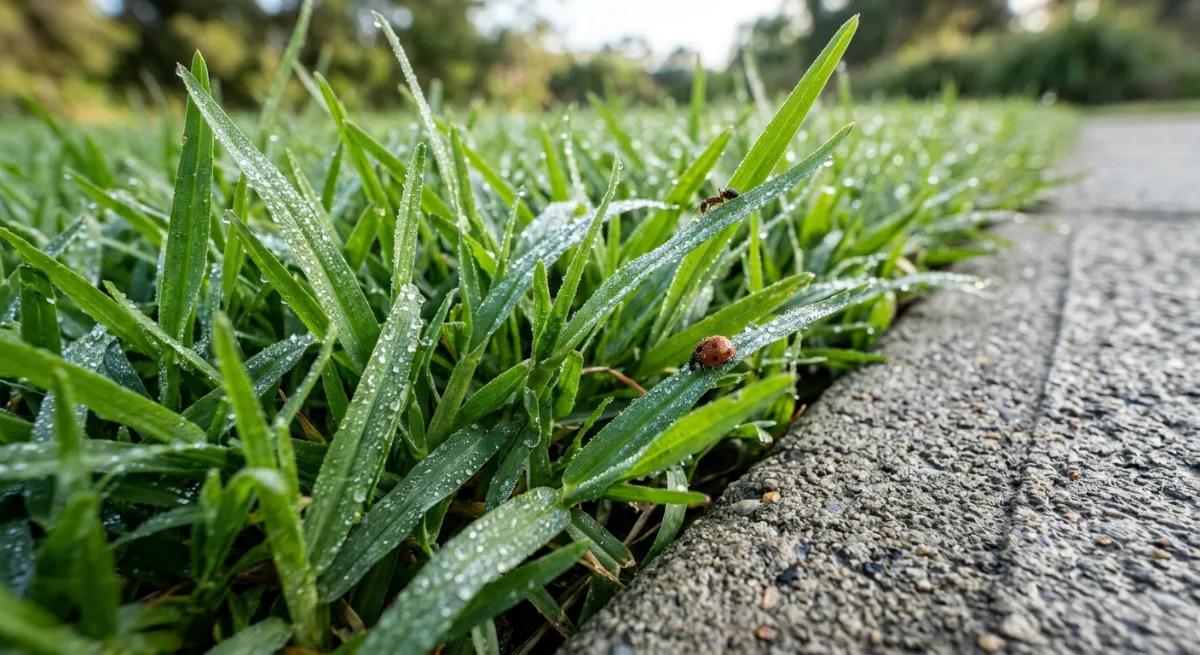
Even with a strict schedule, local environmental factors will throw curveballs at your property. One of the most aggressive challenges is the dominance of Kikuyu grass. While incredibly drought-tolerant, its thick, creeping runners will quickly invade garden beds, concrete pathways, and driveways if not meticulously edged.
Another frequent headache for local homeowners is the dreaded Onehunga weed. This low-growing menace plagues Auckland lawns, producing sharp, painful prickles right in the middle of summer. Controlling it requires precise timing; selective herbicides must be applied in early spring before the plant sets its prickly seeds.
Hedge maintenance also presents a unique struggle. Fast-growing privacy screens are popular in high-density suburbs, but they demand frequent shaping. Neglecting a hedge for even a single season can result in woody, bare patches that take years of careful pruning to fully recover.
Never cut off more than one-third of the grass blade length in a single mow. Scalping the lawn removes its ability to photosynthesize, sending the turf into severe shock and inviting weed infestations.
When to Hire a Professional vs. DIY Lawn Care on the Shore
For the avid gardening enthusiast, maintaining a section can be a rewarding weekend hobby. However, for the time-poor Kiwi homeowner, it often morphs into an exhausting chore. Balancing family time, work commitments, and property upkeep is a constant struggle.
DIY care requires a significant upfront investment in reliable machinery, fuel, trimmers, and organic waste disposal solutions. Furthermore, inconsistent DIY mowing—often delayed by bad weather or busy schedules—leads to ragged grass, messy edges, and a generally unkempt street appeal.
Engaging a professional service provides the ultimate “set-and-forget” convenience. A dedicated local operator ensures that the grass is cut cleanly, the edges are precision-trimmed, and all green waste is removed flawlessly. This consistency is what separates an average yard from a highly manicured property.
Finding Reliable Local Lawn and Hedge Maintenance Services Near You
The landscape maintenance industry is unfortunately plagued by unreliable operators. Many homeowners have experienced the frustration of “no-shows” without any communication, or contractors who leave messy grass clippings blown into the swimming pool or garden beds.
When searching for dependable lawn care in Auckland across our various Service Areas, prioritize businesses that emphasize transparent communication and active quality control. An owner-operated model usually guarantees a much higher standard of care than a massive, faceless franchise where technicians are rushed from job to job.
Look for providers who offer value-first pricing without hidden surcharges. They should be deeply familiar with the specific challenges of the North Shore, from navigating steep residential berms to handling rapid spring growth flushes. A truly professional partner treats your property with the same respect as their own.
Always confirm what is included in a standard maintenance quote. Premium providers will automatically include precise weed-eating along edges and complete green waste removal as part of their baseline service, rather than charging them as hidden extras.