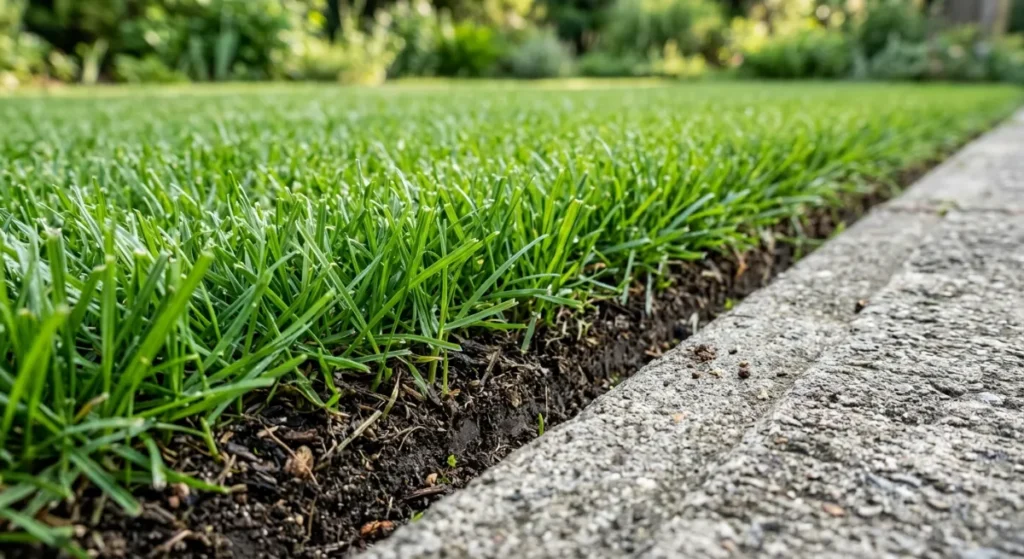
Albany’s unique microclimate presents a distinct set of challenges for property owners wanting a pristine, green outdoor space. Nestled on Auckland’s North Shore, the area is notorious for its heavy, podzolised clay soils that bake hard in summer and turn into waterlogged bogs during winter. Mastering Albany Lawn Care requires more than just pushing a mower across the grass every few weeks. It demands a scientific understanding of local rainfall patterns, soil composition, and seasonal turf growth rates.
Key Takeaways
Effective Albany Lawn Care requires adapting to heavy clay soils and seasonal Auckland rainfall. Core aeration is essential to prevent winter waterlogging, while mowing heights must be raised during dry summers. Always follow the one-third rule—never cutting more than a third of the grass blade—to maintain deep roots and drought resistance.
Albany Lawn Care: Recommended Mowing Schedules and Turf Management Practices
Proper turf management in the North Shore region hinges on adapting to extreme seasonal shifts. Auckland experiences an average annual rainfall of over 1190mm, with the heaviest deluges occurring between May and August. This dramatic fluctuation directly impacts how quickly grass grows and how often it needs to be cut. At About Auckland Lawns, we find that implementing a responsive Albany Lawn Care schedule prevents turf stress and weed infestations.
When temperatures rise in spring, cool-season grasses like Ryegrass and Tall Fescue enter a phase of hyper-growth. During this period, delaying a mowing session by even a few days can result in an overgrown, unmanageable yard. Conversely, the aggressive warm-season Kikuyu grass thrives in the peak heat of summer. Understanding which grass species dominates your property is the first step in establishing a professional maintenance routine, similar to our tailored Ponsonby Lawn Mowing service.
Seasonal Mowing Frequency Matrix for Albany Soils and Turf Varieties
The golden rule of professional turf management is the one-third rule. You should never remove more than one-third of the grass blades total height in a single cut. Removing too much leaf tissue at once sends the grass into shock, stunting root development and making it susceptible to disease. In Albany’s nutrient-dense but compact soils, deep roots are essential for survival.
Avoid mowing your lawn immediately after heavy Auckland rain showers. Wet grass clumps together, clogging the mower deck and resulting in an uneven, torn cut that damages the turf.
During the explosive spring growth window, maintaining the one-third rule often requires weekly mowing. As the summer dry spells hit, growth slows for cool-season grasses, allowing the frequency to drop to every ten to fourteen days. Winter introduces a dormancy period for many grass types, meaning mowing is only required every three to four weeks.
| Season | Growth Rate | Recommended Frequency | Ideal Cutting Height |
|---|---|---|---|
| Spring (Sep – Nov) | High / Rapid | Every 7 Days | 5 – 6 cm |
| Summer (Dec – Feb) | Slow (Cool Season) / High (Kikuyu) | Every 10 – 14 Days | 7 – 8 cm |
| Autumn (Mar – May) | Moderate | Every 10 Days | 5 – 6 cm |
| Winter (Jun – Aug) | Dormant / Very Slow | Every 21 – 28 Days | 5 cm |
Adjusting Mower Deck Heights for Seasonal Resilience
The height of your mower deck should fluctuate in tandem with the Auckland seasons. During the peak of summer, raising the deck to leave the grass at roughly 7 to 8 centimeters provides essential shade for the soil. This extra length cools the root zone, reduces moisture evaporation, and prevents the sun from baking the Albany clay into concrete.
Conversely, as winter approaches and daylight hours decrease, the deck should be slightly lowered. Cutting the grass to around 5 centimeters prevents the turf from matting down under the weight of heavy winter rain. However, extreme caution must be taken never to scalp the lawn, as exposing the soil surface invites immediate weed germination and moss growth.
Understanding Albany Clay Soil Profiles and Local Turf Drainage Challenges
The foundation of any healthy landscape lies beneath the surface, and Albany presents a notoriously difficult subterranean environment. The region sits atop the Waitemata group sandstones and siltstones, which have weathered over millennia into dense residual clay. This specific soil profile, often referred to as Albany silt loam or Albany clay, is highly impermeable.
During the relentless Auckland winter, this clay acts like a subterranean bathtub. Water struggles to drain away, leading to surface pooling, root rot, and the rapid spread of fungal diseases. Grass roots literally drown in these waterlogged conditions, creating bare patches that are quickly colonized by opportunistic weeds.
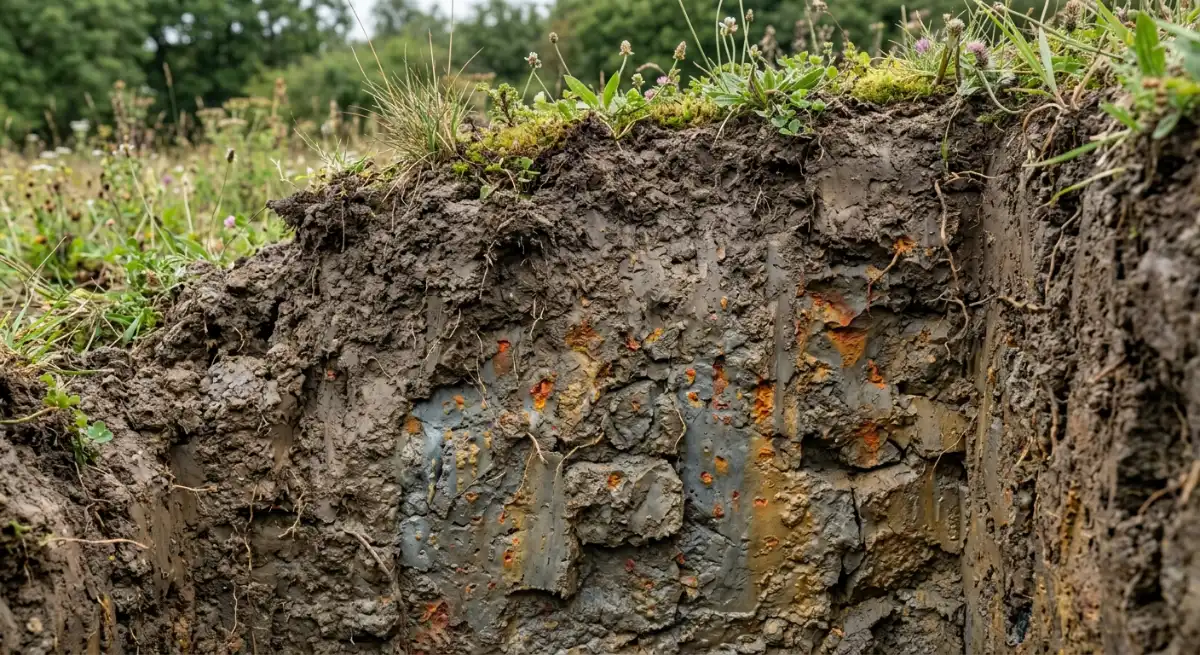
When summer arrives, the opposite problem occurs. The dense clay bakes under the New Zealand sun, shrinking and cracking as it dries out. This creates a concrete-like surface that repels water, causing summer rain to run off rather than penetrate the root zone. Effective Albany Lawn Care requires proactive intervention to break this cycle of winter flooding and summer baking.
Essential Aeration and Soil Conditioning Methods for Aucklands North Shore
To combat the structural limitations of Albany clay, mechanical aeration is an absolute necessity. Core aeration involves extracting small plugs of soil from the ground, instantly relieving compaction. These physical holes allow oxygen, water, and nutrients to bypass the hard crust and reach the root system directly.
The best time to aerate Albany lawns is during early autumn (March to April). The soil is still warm enough for rapid root recovery, but the heavy winter rains have not yet arrived to waterlog the open core holes.
Following aeration, soil conditioning plays a pivotal role in long-term turf health. Applying gypsum, or calcium sulfate, to heavy clay helps break down the dense soil structure over time. Gypsum works by drawing clay particles together into larger crumbs, which naturally opens up microscopic drainage channels.
Topdressing with a high-quality, sandy loam compost mix after aeration further improves the soil profile. The sand introduces permanent drainage pathways, while the organic compost feeds the microbial life in the soil. Over several seasons, this topdressing process gradually transforms the difficult Albany clay into a more forgiving, fertile growing medium.
Strategic Nutrient Application for Clay-Based Turf
Fertilizing a lawn in Albany requires a different approach than sandy coastal soils. Because clay soils hold onto nutrients tightly, they can easily become toxic if over-fertilized, leading to nutrient lockup. A soil test is highly recommended to determine the exact pH and nutrient deficiencies before applying any synthetic fertilizers.
Most Albany soils lean towards being acidic due to high rainfall and clay content. Applying agricultural lime every few years helps raise the pH, making existing nutrients more bioavailable to the grass roots. When selecting a fertilizer, opt for a slow-release granular formula with a balanced NPK ratio to provide steady, sustained feeding rather than a rapid flush of weak growth.
Key Standards in Professional Lawn Maintenance: Expert Verification Guidelines
Achieving a pristine, golf-course-quality finish requires strict adherence to professional maintenance standards. One of the most overlooked aspects of Albany Lawn Care is the physical condition of the mowing equipment. Mower blades must be kept razor-sharp to ensure a clean, surgical cut on every pass.
Mowing with dull blades is one of the fastest ways to destroy a healthy lawn. It shreds the grass tips, causing massive moisture loss and creating open wounds that invite fungal diseases like Brown Patch and Red Thread.
Dull blades tear and shred the grass rather than cutting it cleanly. These jagged, torn edges turn brown quickly, giving the entire lawn a dull, yellowed appearance within days of mowing. More importantly, the ragged wounds create massive entry points for fungal spores and bacterial infections, which thrive in Aucklands humid climate.
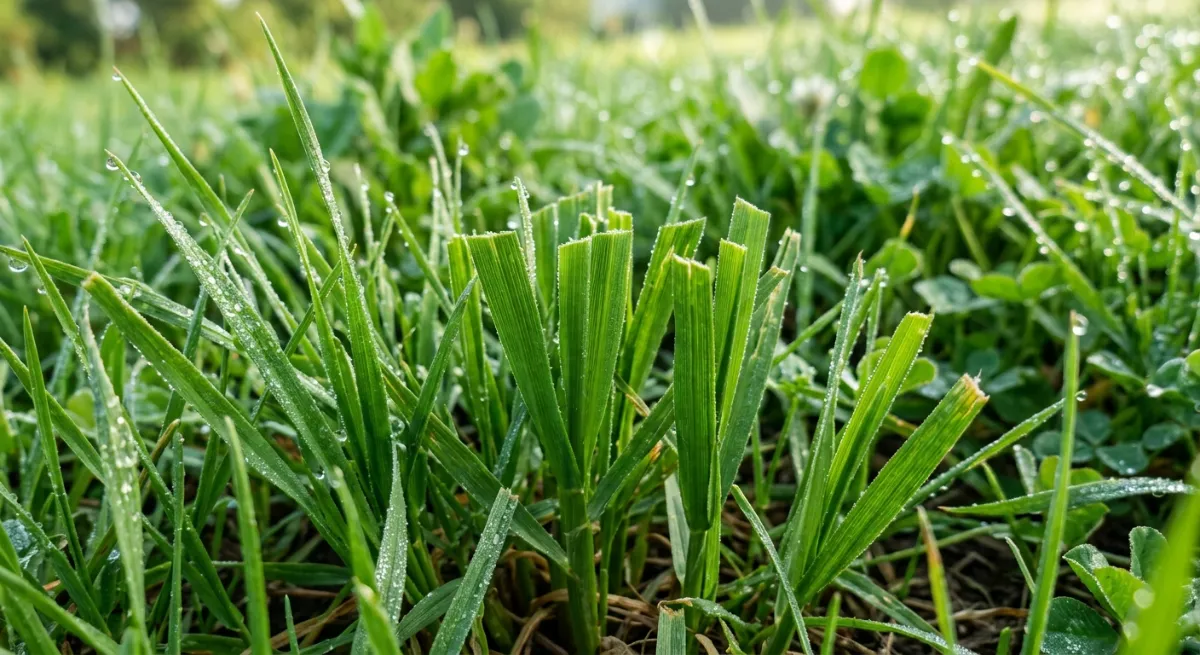
Another critical standard is the meticulous management of grass clippings and green waste. While leaving light clippings on the lawn can return valuable nitrogen to the soil during dry periods, it is disastrous during a wet Albany winter. Heavy, wet clumps of clippings will smother the grass below, blocking sunlight and creating the perfect environment for turf diseases.
Dethatching and Scarifying for Optimal Turf Breathing
Thatch is a dense, spongy layer of dead grass stems, roots, and organic debris that accumulates between the soil surface and the green grass blades. While a thin layer of thatch is beneficial for moisture retention, anything thicker than 15 millimeters becomes a barrier. In Albany’s humid environment, excessive thatch acts like a sponge, trapping water at the surface and encouraging fungal diseases.
Scarifying, or dethatching, is the mechanical process of slicing through this layer and ripping the dead material out of the lawn. This process is best performed in early autumn, allowing the lawn time to recover while the soil is still warm and moisture is plentiful. Removing this suffocating layer dramatically improves the efficacy of fertilizers, water penetration, and overall turf density.
A Step-by-Step Lawn Restoration and Weed Control Plan for Albany Properties
Overgrown or neglected lawns in Albany can be restored, much like our specialized Papatoetoe Section Tidy-Ups, but it requires a systematic, phased approach. The first phase is always weed eradication. Broadleaf weeds like Onehunga weed, plantain, and dandelion thrive in compacted clay soils where grass struggles to compete.
A targeted, selective herbicide application during the active growth phases of autumn or spring yields the best results. Selective herbicides target the broadleaf weeds without harming the surrounding grass.
Always check the local Auckland weather forecast before applying herbicides. Ensure there is no rain expected for at least 24 hours, and avoid spraying on windy days to prevent chemical drift onto desirable garden plants.
A successful lawn restoration project in Albany follows three critical phases:
- Eradication: Applying selective herbicides during active growth windows to eliminate broadleaf competition.
- Aeration and Seeding: Relieving clay compaction via core aeration and overseeding with deep-rooting Fescue blends.
- Nutrition: Applying slow-release granular fertilizers to provide sustained macronutrients without risking chemical burn.
Once the weeds die off, the resulting bare patches must be aggressively overseeded to prevent new weeds from taking their place. For Albany properties, a premium Tall Fescue or Ryegrass blend is ideal, as these varieties establish deep root systems capable of penetrating heavy soils. Overseeding should always be paired with a starter fertilizer to give the new seedlings a competitive advantage.
Finally, establishing a robust seasonal feeding schedule locks in the restoration results. A slow-release, granular fertilizer applied in early spring and mid-autumn provides a steady drip-feed of macronutrients. By addressing the soil, controlling the weeds, and feeding the turf, any North Shore property can maintain a resilient, vibrant green space year-round.
Targeting Aggressive North Shore Weed Species
Onehunga weed is the bane of barefoot summers in New Zealand, producing sharp, painful prickles in late spring. To effectively control Onehunga weed, herbicide applications must be timed perfectly in early spring before the plant flowers and sets its prickly seeds. Once the prickles have formed, spraying will kill the plant, but the painful spines will remain in the lawn all summer.
Creeping Oxalis is another highly invasive weed that plagues Albany lawns, characterized by its small clover-like leaves and yellow flowers. It spreads rapidly through creeping stems that root at the nodes, making it incredibly difficult to pull by hand. Multiple applications of a specialized broadleaf herbicide containing Triclopyr or Picloram are usually required to completely eradicate established Oxalis colonies.
Managing Common Auckland Turf Pests
Grass grubs are the larvae of the brown beetle and are notorious for destroying lawns across the North Shore. They feed on the roots of the grass during late autumn and winter, causing large yellow patches that can be peeled back like a carpet. Early detection and targeted insecticide treatments in March or April are critical to stopping the lifecycle.
Another common issue in Albany is the Porina caterpillar, which emerges at night to eat the grass leaves down to the crown. Unlike grass grubs, Porina damage often looks like thin, bare patches rather than dead turf. Applying a surface-level biological control or chemical spray during early winter ensures these pests are neutralized before major damage occurs.